Hi All!
Our weather may not exactly be inspiring us to get out into the garden at the moment! However, here at Martin Hudson & Gibson we have these lovely lead framed terrarium lanterns in stock; which can be used as ornamental pieces or alternatively provide a unique environment for plants...a trend that was popular in the Victorian era.
Suitable for either indoor or outdoor use, these geometric terrariums feature antique glass and are approximately 30 - 40 years old.
Here at Martin Hudson & Gibson we've added some artificial flowers as an example of what can be done. Why not try adding candles...changing the colour of the candles depending on the season? Or you could try turning them into attractive lamps or wall lights if you're feeling adventurous?
Whether you decide to place them indoors or out, these decorative lanterns will make a charming addition to any space...
Happy Vintage Wednesday!
- Angela Lowth
Vintage Aspects of Interior Design from Martin-Hudson & Gibson Ltd. 51 Sandycove Road, Sandycove, Co. Dublin. Tel:2843486
Wednesday, 29 June 2016
Wednesday, 27 April 2016
Tosca
Hello
again! and Happy Vintage Wednesday! Once again, while exploring our
store, I have come across another spectacular find! This time, a rare
fabric by Designer Pierre Balmain. This vibrant, 100% cotton specimen
was created by the designer exclusively for Fardis Designs in 1986.
It flashes red, gold, fuchsia, and plumb, while depicting an image of
layered swags and tails. Detailed, gold tassels and trims line the
layers of the printed swags, making the fabric appear to have depth
and texture.
Looking
at this fabric one may find it hard to believe that furnishing fabric
design was not Balmain's main endeavour. The late Balmain
studied architecture in Paris, was part of the French Air Force, and
became a freelance sketch artist for Robert Piguet. He then grew to
become the founder/director, Maison Balmain, in Paris, and Balmain
Fashions, in New York. He has become one of the most well known
fashion designers in the world. Balmain
believed "dressmaking is the architecture of movement." His
mission, as he saw it, was ''to beautify the world like an
architect''. This idea is seen throughout his designs, and even
relates to this specific fabric.
Pop
by Martin Hudson and Gibson to see what else you can find in our
store :)
-Jordan
Galuppi
Peony Gardens
This
is my 4th month
working with John at Martin Hudson and Gibson. Everyday, I discover
fabulous treasures in our store. Today, as I was browsing
through our archives, I stumbled across an alluring fabric;
Peony Gardens from the Jasmine and Jade Collection, made by
Greeff for Warner and Sons. Greeff, an American based designer,
travelled worldwide seeking inspiration for all of his designs.
Through his career, he brought out two collections a year, with this
specific one dating back to the 1980's. Beautiful greens and blues
with splashes of orange mix perfectly to create the organic pattern
on this 100% cotton fabric. Searching further, I dusted off another
stash, finding a meticulously stitched tablecloth
from the same era, in a second colour wave of the Peony Gardens
fabric. Pleated and piped, this tablecloth would have once covered a
round chip board table. All the rage of the 80's! Come on in to see
more of the beautiful vintage fabrics we have (and are still
discovering!) in our store.
-
Jordan Galuppi
Wednesday, 23 July 2014
Vintage Quilted Bedspread
Recently acquired vintage quilted double bedspread in pink with a 15cm bullion fringe, probably made in Malahide in the 1970's.
Wednesday, 7 May 2014
Warner Archive II: Fancy Stripe
We are talking about another chintz fabric again, after looking at this Robert Allen one a few weeks ago. This time it is a fabric from 1983 from the Archive II Collection by Warner. We have acquired 40 metres of "Fancy Stripe" in Green here in store.
If you haven't read our other blog post describing chintz, the fabric is usually a glazed cotton fabric with printed patterns and designs on a plain background. You can see from the photo of the chintz above the glazed look of the fabric.
If you want to have a look at this fabric and see if it is what you are looking for, pop into 51 Sandycove Road, Sandycove or call us on 01 2843486.
Lucy Kiernan
"Fancy Stripe" in Green
Vintage- 1983.
This fabric would have been ideal for both curtaining and lining. Patterned linings like this make your curtains look interesting from the outside as well as in.
If you haven't read our other blog post describing chintz, the fabric is usually a glazed cotton fabric with printed patterns and designs on a plain background. You can see from the photo of the chintz above the glazed look of the fabric.
If you want to have a look at this fabric and see if it is what you are looking for, pop into 51 Sandycove Road, Sandycove or call us on 01 2843486.
Lucy Kiernan
Wednesday, 30 April 2014
Ronald Reagan's Blanket
Following on from our last Vintage Wednesday on Sybil Connolly's fabric, we have another piece from the 1980's in our shop. In the past, Martin-Hudson & Gibson produced 3 wool blankets for Ronald Reagan, the 40th president of the United States and radio, film and television actor. They were made for the use of the guest bedrooom at the US Ambassador's residence in the Phoenix Park in Dublin for Regan's visit in 1984. In the end only 2 were used, and the remaining blanket is here at 51 Sandycove Road.
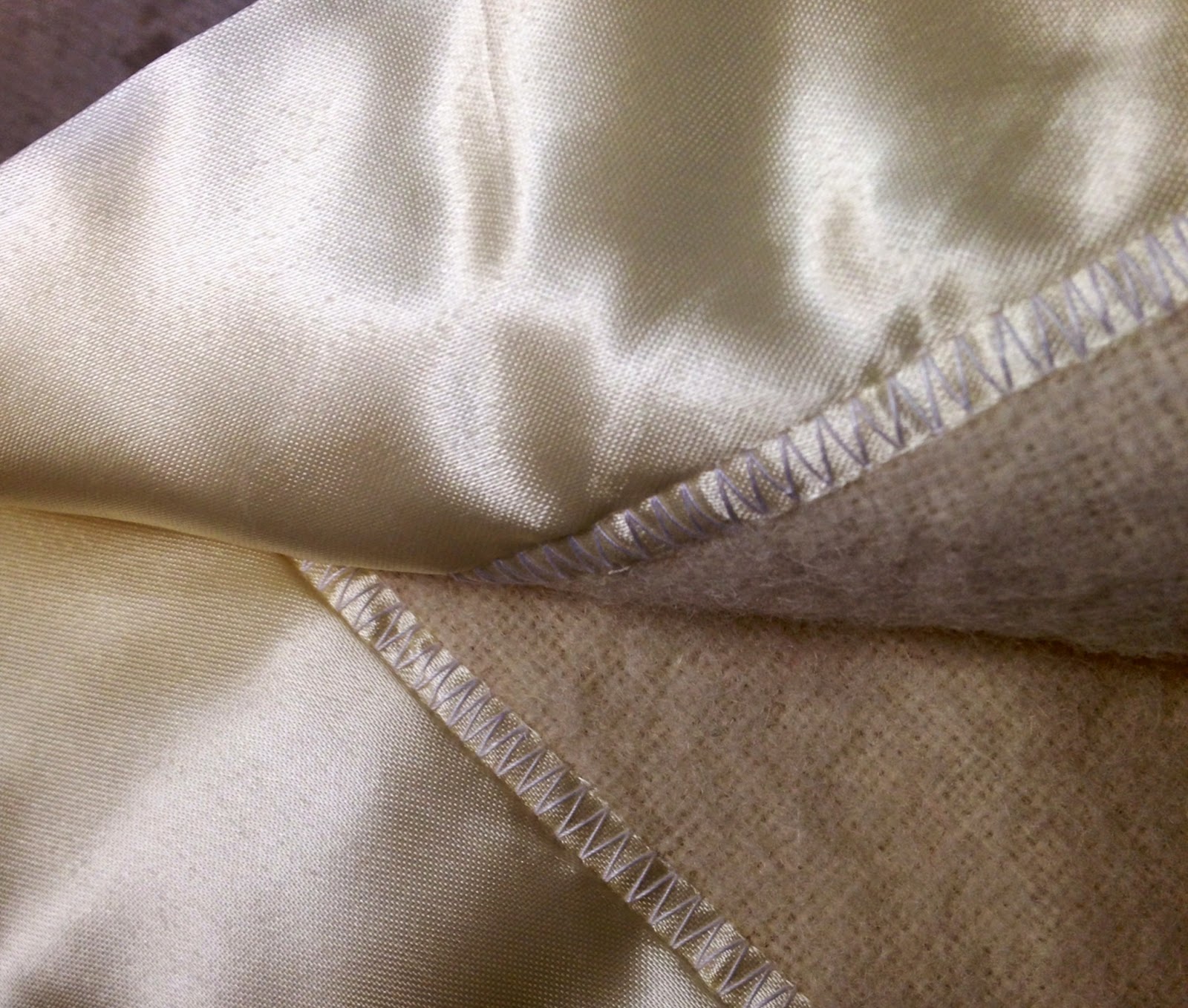
The blanket is a simple cream 100% natural pure new wool with a satin border. It is an alternative to the modern duvet and is a little piece of history.
It was produced by Foxford Woolen Mills situated by the River Moy in County Mayo and is one of the last working mills in Ireland. Founded by Irish Sister of Charity Mother Agnes Morrogh-Bernard, it overcame many challenges over the years but it continues to succeed. Today it is a thriving mill, especially after its modernisation including the addition of a visitor's centre and restaurant. Foxford have four stores in Ireland and many all over the world. They began producing these traditional bed blankets when they were first established and have been doing so ever since.
Lucy Kiernan.
Ronald Wilson Reagan, 1911-2004
The blanket at Martin-Hudson & Gibson, 51 Sandycove Road, Dublin.
It was produced by Foxford Woolen Mills situated by the River Moy in County Mayo and is one of the last working mills in Ireland. Founded by Irish Sister of Charity Mother Agnes Morrogh-Bernard, it overcame many challenges over the years but it continues to succeed. Today it is a thriving mill, especially after its modernisation including the addition of a visitor's centre and restaurant. Foxford have four stores in Ireland and many all over the world. They began producing these traditional bed blankets when they were first established and have been doing so ever since.
Source: http://www.foxfordwoollenmills.com/
Lucy Kiernan.
Labels:
1980s,
blanket,
dublin,
Foxford,
furnishings,
guest bedroom,
history,
interior design,
mayo,
mhg,
mill,
phoenix park,
president,
river moy,
Ronald Reagan,
satin,
traditional,
usa,
vintage,
wool
Wednesday, 16 April 2014
Sybil Connolly for Robert Allen
We recently received a very interesting fabric in the store, with a great history in particular an Irish one. The steel blue chintz with floral patterns is part of the Sybil Connolly collection for Robert Allen from 1985.
Sybil Connolly (1921-1998) was an Irish designer who was, and is, a pioneer to Irish business women with her huge contribution to the fashion industry. With her innovative use of traditional fabrics she had the international world of fashion falling at her feet. She began her career by studying dress making in London followed by a managerial position under the French designer Gaston Mallet at fashion house Richard Alan. After replacing Mallet as the design director, she changed the ways of the company and started creating traditional fabrics, using tweed, crochet and lace. The interesting silhouettes and the vibrancy of the colours soon attracted the attention of the American market including the editor of Harper's Bazaar, Carmel Snow.
Snow brought press and buyers to Ireland to see Sybil's collection. Following this gathering, Connolly's full length red cape and white crochet dress was featured on the cover of Life magazine with the caption 'Irish Invade Fashion World'. Throughout her career she designed for many Hollywood stars including Elizabeth Taylor and Julie Andrews. Jackie Kennedy wore her trademark pleated linen dresses in her official White House portrait.
However as the fast paced fashion industry moved at a rate that Sybil had a reluctance to adapt to, her career was forced to change direction. She tried her hand at interiors, collaborating with Tiffany & Co. in designing tableware items including china patterns such as Mrs. Delany's Flowers and designing fabrics and wall coverings for Brunschwig & Fils. Her book, In An Irish House, is a magnificent collection of ancestral Irish homes. The book shows architectural detail ranging from Gothic to Palladian, oil paintings and watercolour landscapes, and luxurious furniture. She includes her own private home at 71 Merrion Square in the book, which also housed her couture studio. The interior of her house was filled with floral wallpapers and fabrics and antique furniture.
Her legacy was evident after her death in May 1998 when thousands of visitors came to her home in Merrion Square to attend an auction where bids were placed on 600 lots.
Chintz was originally wood blocked printed, painted or stained calico produced in India used for bed covers, quilts and draperies.
The early chintz fabrics that were brought into Europe were rare and expensive but by 1680 more than a million pieces of chintz were being imported into England per year. With imported chintz becoming more and more popular in the 17th century the English and French mills were worried as they could not make chintz. In 1686, the French declared a ban on all chintz imports. In 1720, the English Parliament approved a law that forbade the use of imported chintz in clothing, upholstery, cushions and any other household furniture. By 1759, the bans were lifted as English and French mills could produce chintz. The European designs began by reproducing the Indian patterns, later adding to them and creating original designs.
Modern chintz usually consists of bright floral patterns with pale backgrounds.
Have a look at another chintz fabric we featured on Vintage Wednesdays here.
Lucy Kiernan.
Sybil Connolly (1921-1998) was an Irish designer who was, and is, a pioneer to Irish business women with her huge contribution to the fashion industry. With her innovative use of traditional fabrics she had the international world of fashion falling at her feet. She began her career by studying dress making in London followed by a managerial position under the French designer Gaston Mallet at fashion house Richard Alan. After replacing Mallet as the design director, she changed the ways of the company and started creating traditional fabrics, using tweed, crochet and lace. The interesting silhouettes and the vibrancy of the colours soon attracted the attention of the American market including the editor of Harper's Bazaar, Carmel Snow.
Sybil Connolly
Snow brought press and buyers to Ireland to see Sybil's collection. Following this gathering, Connolly's full length red cape and white crochet dress was featured on the cover of Life magazine with the caption 'Irish Invade Fashion World'. Throughout her career she designed for many Hollywood stars including Elizabeth Taylor and Julie Andrews. Jackie Kennedy wore her trademark pleated linen dresses in her official White House portrait.
An image of Connolly's classic handkerchief linen dress from the 1950s, and in modern day worn by Gillian Anderson at the BAFTAs.
However as the fast paced fashion industry moved at a rate that Sybil had a reluctance to adapt to, her career was forced to change direction. She tried her hand at interiors, collaborating with Tiffany & Co. in designing tableware items including china patterns such as Mrs. Delany's Flowers and designing fabrics and wall coverings for Brunschwig & Fils. Her book, In An Irish House, is a magnificent collection of ancestral Irish homes. The book shows architectural detail ranging from Gothic to Palladian, oil paintings and watercolour landscapes, and luxurious furniture. She includes her own private home at 71 Merrion Square in the book, which also housed her couture studio. The interior of her house was filled with floral wallpapers and fabrics and antique furniture.
This sofa in Sybil's house was covered in another fabric from the collection for Robert Allen.
Her legacy was evident after her death in May 1998 when thousands of visitors came to her home in Merrion Square to attend an auction where bids were placed on 600 lots.
Chintz was originally wood blocked printed, painted or stained calico produced in India used for bed covers, quilts and draperies.
The early chintz fabrics that were brought into Europe were rare and expensive but by 1680 more than a million pieces of chintz were being imported into England per year. With imported chintz becoming more and more popular in the 17th century the English and French mills were worried as they could not make chintz. In 1686, the French declared a ban on all chintz imports. In 1720, the English Parliament approved a law that forbade the use of imported chintz in clothing, upholstery, cushions and any other household furniture. By 1759, the bans were lifted as English and French mills could produce chintz. The European designs began by reproducing the Indian patterns, later adding to them and creating original designs.
Modern chintz usually consists of bright floral patterns with pale backgrounds.
Have a look at another chintz fabric we featured on Vintage Wednesdays here.
Lucy Kiernan.
Wednesday, 15 January 2014
Emeralite- The Banker's Lamp
We recently had a
client in looking for something quite specific- A Bankers Lamp.
For those of you who
may be unfamiliar with the Emeralite Lamp (or Banker's Lamp as it is
more commonly referred to) it can be seen below. The Banker's Lamp
has a single brass knuckle with a round base, with a unique
(and sometimes) square edged emerald green cased glass shade.The Banker's
Lamp usually stands approx 14” high. An original Banker's Lamp
should have a brass pull chain rather than a switch.
The glass shades are
generally flat on the sides and back, with the front gently sloping
towards the desk or viewer.
The Bankers Lamp has a
psychological effect upon an individual sitting amongst its green
glow.
The colour green is one
of the “cool” colours.
Green is
psychologically soothing and so its use in an office or workspace
encourages calm focus and concentration. In fact, at the backstage of
a theatre one might find a “Green room” which has the primary
purpose of calming actors' nerves before going on-stage.
The Emeralite lamp as
we know it today was first produced in 1909 by Harrison D. McFaddin
who created the company H.G. McFadden & Co.
According
to references, all Emeralite shades were produced in the glass
factory of J. Schreiber & Neffen; the plant was located in the
city of Rapotin, Moravia, in what is now the Czech Republic
(Emeralite.com).
The
Emeralite's production may be divided in to four distinct periods.
Over these periods the lamp bases went from simple and undecorated
(4378 Series) to the more elaborately decorated second and third
series.
The
4378 Series: 1909-1916
The
shade was designed with a hole at each side so that it could be
attached to and swivel upon the base arm and then locked in to the
desired position. The bases were generally brass plated over a base
metal (square or rectangular base) or solid brass (round base).
The
8734 Series: 1916-1930's
The
Emeralite shades from this generation did not have holes on each
side. Instead a new base armature was designed and the shade was
created with indentations which fitted into the channels on the new
base arm. The shade was clamped in to this armature for stability and
so could be removed for cleaning if necessary. Bases made during
this period were usually solid brass.
No.9
Series: 1930's for approx 5 years
The
general design remained the same but the shade increased in size from
8.5 inches to 10 & 12 inches. Again the shade was created with an
indentation at the back to fit in to the clamp and could be removed
for easy cleaning. However the number 9 series larger shades required
two lamps (bulbs) rather than one. Similarly to the second period,
the bases were usually made of solid brass.
Inferior
Produce: From late 1930's for 20+ years
Most
of the “Emeralites” produced after the number 9 series' were not
designed to the standards of the originals and so are not of great
monetary value. Many of these lamps were fluorescent and were
constructed with metal shades.
![]() |
| A Double Emeralite Partner's Lamp |
Most of the lamps created had a hidden cast iron weight in the base of the lamp.
McFaddin
retired around 1939 and the company was bought by employee Charles
Inness Brown who changed the company name to Emeralite Co. Inc.
During the 1950's the company unfortunately became unprofitable and
was sold again.
Following this, the company's name was changed to
Tilarem but the company was eventually dissolved in 1962 and sadly, Emeralite
production died with it.
If you are looking for a Banker's Lamp, please contact us at 00 353 1 284 3486 or call in to our showroom at 51 Sandycove Road, Sandycove, Co. Dublin.
Primary source: http://www.emeralite.com/history.html
Ciara Eloise Nolan
Wednesday, 20 November 2013
"Chandeliers- So Stylish It Hertz"
This week we're switching to a rather enlightening topic- Chandeliers...
Chandeliers are “branched, decorative lighting fixtures which hold a number of bulbs or candles and are hung from a ceiling”.
The word chandelier
came from the Latin word for candle,
candela.
The Latin candelabrum
was later adopted by the French, who adjusted the word slightly, to
chandelabre. From this came the new spelling for Chandelier,
when borrowed directly from the 12th century Old Castilian
language.
The first record of a chandelier used in interiors is during the Medieval era (5th-15th century) and only by the wealthy.

An old flame- During medieval times, the chandeliers were simple wooden crosses with vertical spikes which would hold candles. The chandelier was suspended from the ceiling using a rope-pulley system for easy lighting of the candles.
Towards the 18th century, merchant class homes showed off their more ornate gilt cast metal and carved and gilded wood chandeliers, with long, curved branches and plenty of candles. Some of these showcased Neoclassical motifs.
The crystal chandelier was introduced after further developments
in glass-making and cheaper production of lead crystal developed.
So stylish it hertz- During the mid 19th century, many candle chandeliers were converted to gas lighting and towards the 1900s, many people used a combination of both gas and electricity. It was from then on that electricity became standard for these homes.
The current situation - Due to the availability
of electricity in the modern world, the measure of status which the chandelier represents has lowered slightly and has become more available to the masses, with many
replica and cheap variations available on the market.
However, there are some very impressive modern chandeliers available today. Check out the 24 light glass chandelier by National Lighting below.
Did you know?
The
world's largest crystal chandelier hangs in the
Ceremonial Hall of the Dolmabahce Palace in Istanbul and weighs a massive 4.5 tonnes and has, count em, 750 lamps!!
AMP-le amount, wouldn't you say?
Got on your wick yet?
Have I lost my spark?
Ciara Eloise Nolan.
AMP-le amount, wouldn't you say?
Got on your wick yet?
Have I lost my spark?
Ciara Eloise Nolan.
Wednesday, 30 October 2013
"The Delftware Explosion"
This week we're looking at
Delft pottery, something which was introduced in the 16th
century & which is very popular today.
We'll start by taking a
quick glance at the city of Delft- the city is located between
Rotterdam & the Hague in the Netherlands.
Delft is famous not
only for its pottery but also for its canals & for the famous
artist Johannes Vermeer who painted domestic interior scenes seen in
middle class living at the time (mid 1600's).
In 1572 William Of Orange took up residence in Delft during the Eighty Years War. Delft, with its city walls for protection served as headquarters during this time & became one of the leading cities in Holland.
"The Delft Explosion" or "Thunderclap" occurred in 1654 when a gunpowder store exploded & killed over 100 people. Many Delft potted pieces depict the devastation of the Delft Explosion.
Delftware pottery or
ceramics primarily include tiles, crockery & ornaments which have
been glazed (the white portion) & decorated with metal oxides.
Delft blue would
possibly be the more collectable range although there are many Delft colour
schemes hugely sought after today.
Delft pottery was
inspired by the Chinese porcelain imports of the 17th
century.
At the time, only the very wealthy could afford this
porcelain. Delft potters began imitating Chinese pieces when there was
an interruption of trade imports around the time of the death of the Wanli Emperor of China.
The city of Delft,
being a home port of the Dutch East India Company, had adopted these
inspirations very early.
Tin glazed pottery came
about during the early 16th century (tin glazed pottery is
valued by its ability to be easily coloured). Simpler pieces were
manufactured in Rotterdam & Amsterdam (amongst other cities) but the
finer, more elaborate pieces were created in Delft.
Delft manufacturers and
potters introduced personal Delft markings during the 1640s. It was
during the next 100 years which Delft made its finest pieces and the
industry saw quite a lot of demand for such fine creations.
From approx 1615,
potters started coating tin glaze on their pieces and covered this in
a clear glaze. This gave depth to the cobalt blues seen in Delft,
which resembles the blues seen in Chinese porcelain pieces.
Delft designs range
from plain and uninteresting to elaborate and beautiful. Some plates
may have only had a very small motif in their centre. Others had
detailed hunting or fishing scenes seen in every day Dutch living.
Some plates were even
embellished with music notes and lyrics on them and at a party when
the food was eaten and the notes could be seen, the guests would sing
this song together.
Many Dutch houses still
have tiles on their floors and walls which were fitted during the
17th century.
Delftware manufactured in
the Netherlands after 1750 is widely considered to be inferior to that made
during the 17th century.
By the end of the 18th
century, British porcelain had taken over the market and as a result
many Dutch Delft manufacturing businesses closed down.
![]() |
| For a bit of fun- A British Airways Delft inspired tail fin! |
If you are looking for
an original piece of Delftware, look for the Delfts Blauw symbol
(found underneath the base) to indicate authenticity and rarity.
These originals are collectibles and can sell for surprising amounts.
Martin - Hudson & Gibson Interior Designers have an interesting collection of Delftware which may be viewed by appointment. To arrange for a private viewing, call us today on 01 284 3486.
Ciara Eloise Nolan.
Wednesday, 11 September 2013
Oldschool Tools
This week we will be taking a glance at some tradesmen's tools which were used back in the Golden Days...
Three
of these tools have been in our possession for a long time- the first was dropped in to our showroom just a
week ago with suggestions of using it in our “Industrial” themed
window display.
The
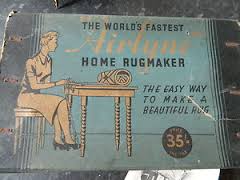
Airlyne Rugmaker is quite a curious looking contraption –
proclaiming to have once been “The World's Fastest Home Rugmaker”,
it was invented
by William Edward Humphreys Jones whilst at Airlyne Products,
Abergele in the 1950′s.
The
device is clamped to the edge of a table and one uses the foot strap
to run the machine so their hands are completely free to manoeuvre the
rug on the table.
There
is a small screw which you move to determine how far the needle
pushes through the base cloth, thus creating a long or short pile.
The
thread is pulled up through the eye and shank of the needle with the
aid of a wire which is provided with the Airlyne.
Getting
your hands on one of these Airlyne Rugmakers won't set you back an
awful lot at all. I'm sure it'll cost you more than the 28 and 6
pence that it originally went for, but chances are you could pick up one for less than the price
of an Ikea rug and you are guaranteed to have a lot more fun making this!
The
next little contraption we'll show you is our Robert's Cookie Cutter,
a nifty little carpet repair tool.
This
may have been used if say for instance cinders had left a scorch hole
in your carpet- the Cookie Cutter is basically a blade fixed in to a
circular handheld cutter with a pin fixed to its centre.
You
press the pin into the centre of the offending area and twist
clock-wise in a full circle.
You
then remove the damaged piece and cut another piece for repair using
the same method and once adhesive is applied to the exposed floor you
line up the rows and insert the newly cut piece, smoothing over with
you r fingers.
The
Morgan Lee Trimmer is a wallpaper trimmer and it has been stored with
its original instruction leaflet.
The
leaflet claims that this invention will “make profits for
enterprising decorators” and “will last a lifetime”.
I
have no doubt about it. The tool came in handy when wallpapers were
sold with a salvedge edge , which had to be cut away by the decorator
before application.
See
the instruction leaflet below for detail on use.
Roberts'
Ankorite Tool is a British made headless pin machine for tacking down
carpeting into place.
You
place a tack into the opening and with the pin entered in to the
Ankorite shaft, you hold it gainst the area of carpeting you wish to
tack down and hammer the top of the tool. Using headless tacks means you are not left with great tack heads rusting your carpet and
it also means you won't feel them so much underfoot.
Each and every one of these tools could still be used today and would still be as functional and as efficient as they were when they were first introduced.
Do you know anyone who still uses these tools today? If so please share this post and let us know, we would love to hear about their experiences with them!
By Ciara Eloise Nolan.
Subscribe to:
Posts (Atom)


.jpeg)
.jpeg)

.jpeg)

.jpeg)


.jpg)